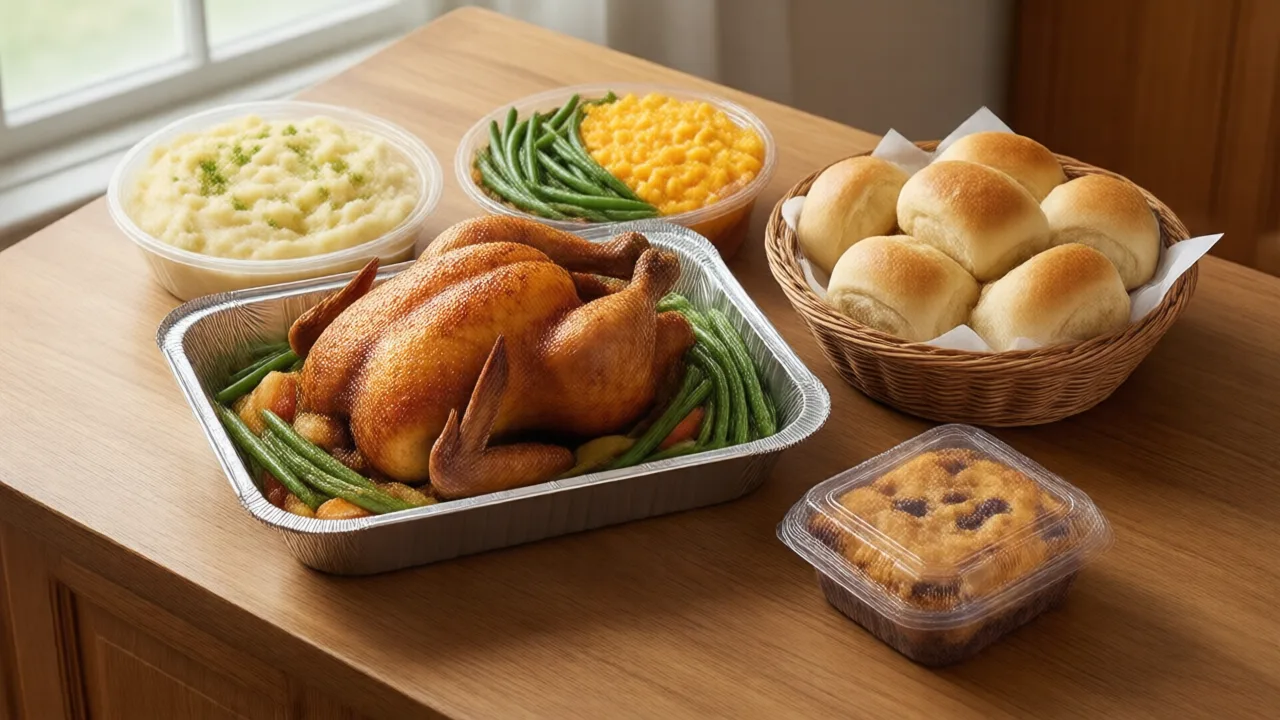
Here's a number that should bother every operator running a takeout program: the average single-person restaurant order in the U.S. hovers around $22, while a household ordering dinner for four routinely spends $55 or more when the menu makes it easy — and walks away when it doesn't. That gap is where most restaurants quietly leave money on the table every single night.
The problem is rarely the food. It's the decision. A parent at 5:45 p.m. with two hungry kids and a phone in one hand doesn't want to build a four-person order dish by dish, mentally tallying whether three entrées and two sides is enough. Faced with that friction, they do the easiest thing: they order a pizza from someone else, or they give up and cook. Either way, you lost a $55 ticket to a $12 decision-fatigue problem.
The fix is a family meal deal — and it's one of the highest-leverage, lowest-cost moves in all of off-premise dining. So let's define exactly what it is, why it works, and how to build one that lifts your ticket without gutting your margin.
What a Family Meal Deal Actually Is
A family meal deal is a fixed-price bundle of food designed to feed a whole household in one order. The defining traits are consistent across every restaurant that runs one well:
- Fixed contents. The customer isn't assembling a meal — they're choosing a package. A typical bundle is one shared protein or entrée, two to three sides, bread, and often a dessert or a round of drinks.
- A single price. One number, clearly below the sum of the parts, so the value reads instantly.
- Feeds a defined headcount. "Feeds 4" or "Feeds 4–6" — a promise about the occasion, not a portion size.
- Built for takeout and pickup. It's packaged to travel and, increasingly, to reheat.
That's the whole concept. What makes it powerful isn't complexity — it's the removal of it. The family meal deal converts a dozen small decisions into one, and in doing so it captures the exact dinner occasion that à-la-carte menus lose.
It's worth drawing a clean line between a family meal and catering, because operators conflate them and then over-engineer the family option. Catering is larger, customizable, ordered in advance, and priced per head. A family meal is everyday, fixed, and ordered for tonight. They can share a kitchen and even a production system — the full mechanics of the larger format live in our catering and takeout operations guide — but the family deal should stay ruthlessly simple.
Why Family Meal Deals Work (The Economics)
Bundling isn't a discount dressed up in marketing language. When it's built right, it improves three numbers at once.
It raises the average ticket. This is the headline. Restaurants that add a well-designed family bundle typically see their average takeout ticket climb 20–35%. You're not converting a $22 order into a $25 order — you're converting the order that never happened, or the two-entrée $34 order, into a $48 bundle.
It protects margin through mix, not markup. Here's the part operators miss. The bundle discount is real but modest — usually 10–15% off the à-la-carte total. What makes it profitable is that bundles sell the high-margin items. Proteins carry your worst food-cost percentage; sides, bread, rice, pasta, and drinks carry your best. A bundle nudges every order toward that profitable mix. Net food cost on a well-built family deal lands around 28–32% — right in line with, or better than, your à-la-carte average.
It lowers labor per cover. One bundle feeding four takes far less line time, register time, and packaging labor than four separate orders. On a busy Friday, that throughput is worth as much as the revenue.
The math of a family meal deal is counterintuitive: you charge less than the sum of the parts and make more money, because the parts you're "discounting" are the ones with the fattest margins to begin with.
How to Design the Bundle
The design work is where family meals are won or lost. A few rules carry most of the weight.
Offer two to four options, no more
The whole point is fewer decisions. A value bundle, a premium bundle, and one alternative (vegetarian, or a kid-friendly pick) covers nearly every household. More than four choices reintroduces the exact decision fatigue you're trying to eliminate, and it complicates prep and food-cost tracking.
Size it honestly, then round up
A bundle that claims to feed four and barely feeds three generates one-star reviews and zero repeat orders. Portion for the occasion, not the spreadsheet — build in a little overage. Families expect a bit left over, and the goodwill of a generous bundle is cheap insurance on repeat business.
Anchor the value visibly
Show the comparison. "$45 — a $52 value" does more work than any adjective. The savings has to be legible in under two seconds, because that's how long you have before the customer defaults to something easier. Getting the number right is a pricing exercise, not a guess; a menu price calculator makes it easy to set the bundle against your real food cost instead of eyeballing it.
Merchandise the photo, not the list
A family meal deal sells on a single strong image of the full spread. This is the same discipline that governs your whole to-go menu — the principles in takeout menu design best practices apply directly, only more so, because a bundle is an emotional purchase about feeding people you love.
| Bundle | Feeds | Price | Contents | Target Food Cost |
|---|---|---|---|---|
| Weeknight Value | 4 | $34–$42 | 1 protein, 2 sides, bread | 30–32% |
| Family Feast | 4–6 | $48–$60 | 1 large protein, 3 sides, bread, 1 dessert | 28–30% |
| Veggie Table | 4 | $36–$44 | Plant-based entrée, 3 sides, bread | 26–29% |
| Add-ons | — | $4–$14 | Extra side, dessert, drink 4-pack | 18–24% |
Notice the add-on row. Just as with a larger holiday to-go program, the extras are where the margin hides — a $6 dessert or a $10 drink four-pack attached to a $45 bundle is nearly all profit, and a well-timed prompt at checkout converts a meaningful share of orders.
Operating a Family Meal Program Without Chaos
The design gets you the sale; execution keeps the customer. Three operational details matter most.
Batch and pre-stage where you can. Fixed contents are a gift to the kitchen — sides can be portioned ahead, proteins fired to a predictable rhythm, packaging pre-labeled. This is exactly why bundles cut labor per cover, but only if you actually design the prep flow around them instead of building each one to order like an à-la-carte ticket.
Hold temperature discipline. A family bundle sits in more containers, travels farther, and often gets reheated. That's more surface area for something to go wrong. The same standards in our guide to takeout food temperature maintenance apply — hot food above 140°F at handoff, anything chilled below 40°F, and a reheat card if the bundle is sold cold.
Make pickup predictable. Family orders cluster hard around 5:00–6:30 p.m. Timed pickup windows and clear staging keep that dinner rush from becoming a bottleneck at the counter — the same discipline covered in our pickup scheduling playbook.
Example scenario: a 60-seat comfort-food restaurant launching family bundles
Illustrative scenario — a composite example built to show how the numbers work. It does not describe a real business or customer.
Consider a 60-seat comfort-food spot that has run takeout for years with an average to-go ticket of $24 and no bundles. In early 2026 it launches three family meal deals — a $38 four-person roast chicken bundle, a $54 feast with brisket and four sides, and a $40 vegetarian option — each anchored with a you-save-$8 line and a single hero photo. Sides are pre-portioned during the 3–4 p.m. lull and a $6 cobbler add-on prompt is added at checkout. Within eight weeks, bundles make up 31% of takeout orders, the overall average to-go ticket rises to $32 (a 33% lift), and blended food cost on the bundles holds at 29%. The cobbler add-on alone attaches to 38% of family orders. The lesson: the restaurant does not add a single new dish. It simply stops making people build dinner themselves.
Turning First Orders Into Regulars
The last piece is retention, and it's where family meals quietly outperform every other takeout format. A family that orders a bundle on Tuesday is telling you they have a recurring, high-value need: dinner, for four, on a weeknight, that they don't want to cook. That's the most valuable customer in your entire off-premise book.
Capture them. A family bundle buyer dropped into a to-go loyalty program with a "buy 5 family meals, get one free" incentive turns an occasional convenience purchase into a standing weeknight habit. The bundle gets them in the door; the follow-up is what makes it a program instead of a promotion.
Family meal deals aren't a gimmick or a race to the bottom on price. They're a recognition that the biggest tickets in takeout belong to households, and households buy differently than individuals — they buy solutions. Give them one clear, generous, fairly priced answer to "what's for dinner," and you'll capture an occasion your à-la-carte menu was quietly losing every night.
Build Bundles That Sell Themselves
Learn how KwickOS handles family meal deals — fixed-price bundles, add-on prompts, timed pickup, and the reporting to see which packages actually lift your ticket.
Learn more about KwickOS bundling →